


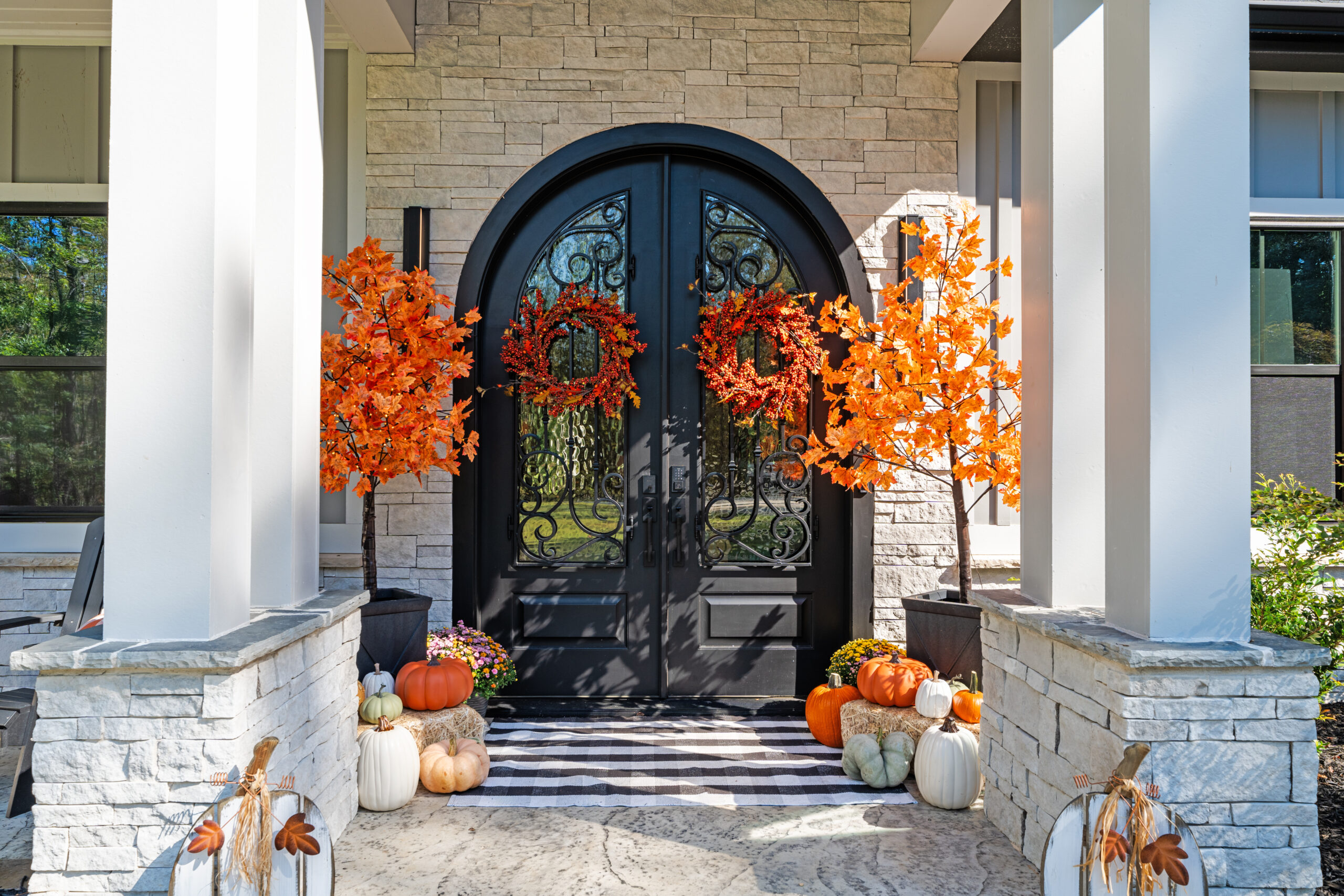
Iron front doors are handmade, so the size, glass, iron pattern, and jamb can be changed on a custom order. Some sizes are in stock, and others are built to order. They’re heavy, they need a finish and some upkeep, and the install takes a little planning.
An iron front door changes the whole look of a house. It’s also a bigger choice than most doors.
People usually come in with the same few questions. Will it fit my opening? Is it in stock, or does it have to be made? Will it rust? Can my installer handle it?
This guide walks through each one. It’s for homeowners in North Georgia, the Atlanta area, and beyond who are thinking about iron. Much of it comes from Dustin Murphy, one of the owners of TLC Elite. He’s been with the business since 2011 and has built a lot of doors himself.
TLC Elite imports its own iron doors. They’re part of The Elite Collection.
These doors are handmade, not molded. That’s the big thing to know. Because they’re made by hand, nearly everything on them can be changed on a custom order:
That helps more than people expect. Dustin’s view is that there’s really no such thing as a standard door size. Many houses have whatever opening the builder made fit at the time. A handmade door can be built for the opening you have.
Some iron exterior doors are on the floor in the Dawsonville showroom. Others are built to order.
The in-stock iron doors are mostly retrofit sizes. They fit a standard double-door opening, but they give it an arched look. So if you have a double door now and want an arch, an in-stock door may work. We’d need to confirm the fit first.
A different size, a certain glass, or a certain iron pattern means a custom order. Special orders take a deposit. Everything is paid in full before pickup or delivery.
Timing on a custom iron door depends on the order. Ask before you build a schedule around a date. That way the date you plan on is a real one.
Not sure which way to go? Bring us the rough opening. That’s the size of the framed hole in the wall, not the old door. The team can tell you if an in-stock door fits or if custom makes more sense.
Iron doors are heavy. Moving one takes several people.
That matters past pickup day. Your installer needs to know what they’re hanging, and they’ll need enough hands to do it. It’s worth asking if they’ve hung iron doors before.
We don’t install, but we can point you to installers we trust.
Delivery is available anywhere in Georgia for a fee. Doors can ship farther, too. Ask about it when you order.
This is the one people miss. Iron doors come with a sprayed factory finish, so they look done. But to keep the warranty, TLC Elite requires you to finish them. That goes for every door TLC Elite sells.
For iron and other metal doors, the finishing instructions call for:
Skip polyurethane, water-based stains or sealers, and all-in-one products. And don’t leave the door out in the weather before it’s finished.
Going with a dark color? Dark colors soak up heat. Pick a finish with a high LRV, which stands for light reflective value. A low-LRV finish voids the warranty.
Sealing all six sides matters for the warranty, too. Missing one voids it. The full steps are in the door finishing instructions.
Once the finish is on, iron doors need some care. It isn’t a lot, but it’s real. Here’s what Dustin tells people to expect.
Sun fades the finish. Direct sun fades the color over time. Plan on some touch-up painting, more so on a door with no shade.
Wet weather can lead to rust. In wet areas, a light sanding every few years helps keep rust from starting.
Scratches happen. Most TLC Elite iron doors come with a touch-up paint kit for scratches.
Bare metal needs primer. If a spot wears down to bare metal, it needs a metal primer before exterior paint goes on.
A full repaint is a job for a pro. The factory finish is sprayed on. A full repaint down the road is best left to someone who does that work.
These come up a lot. None of them are hard to avoid.
If you have an HOA, check with them before you order.
Customers often snap a photo of a door in the showroom and send it in. Most of the time, it’s approved. When it isn’t, it’s usually a modern style where the HOA wants something more traditional.
So if your neighborhood leans traditional, a photo up front can save a back-and-forth later.
Iron doors are easier to judge in person. You can see the iron work and the glass up close, and get a feel for the size.
The showroom in Dawsonville is open six days a week, Saturdays included. It doesn’t matter how new you are to this. The team will walk you through it until you feel sure.
If you’d rather start with a question, send it over. A photo of your current door and the rough opening is a good place to start.
This article is provided for general education and information, not advice tailored to your situation. We may use AI tools to help create content. Information may contain errors or become outdated. Verify details, use your own judgment, and consult a qualified professional when needed. You are responsible for your decisions and how you apply this information. Examples and past results do not guarantee similar outcomes.
