

To figure out how much composite decking you need, start with the deck’s length and width. Then add boards for stairs, borders, and cuts. The boards are only part of the job, so plan for fasteners, trim, and the frame underneath too.
Most people start a deck plan by pricing boards. That makes sense. Boards are the part you see.
But a composite deck order has more pieces than that. Stairs, edges, and the frame all add to what you need. Miss one, and you’re making a second trip or waiting on more material.
Here’s a simple way to plan how much composite decking you need, and what else belongs on the list.
Measure the length and width of the deck surface. Multiply them to get square feet. A 12-by-16-foot deck is 192 square feet.
If the deck isn’t a simple rectangle, break it into smaller rectangles. Measure each one and add them up.
While you’re measuring, note which way the boards will run. Boards usually run across the joists underneath. That choice affects how many boards you need and how many cuts you make.
Composite decking is sold by the board, not by the square foot. How many boards you need depends on a few things:
Board length matters more than people expect. A board that matches your deck’s length can mean fewer seams and less waste. Check with the TLC Elite team on which lengths are available before you count.
Plan for some extra boards, too. Cuts, ends, and the odd mistake all use material. A simple, square deck needs less extra. A deck with angles or a diagonal pattern needs more.
Stairs are easy to forget. Each step needs its own treads, and taller decks can mean several steps.
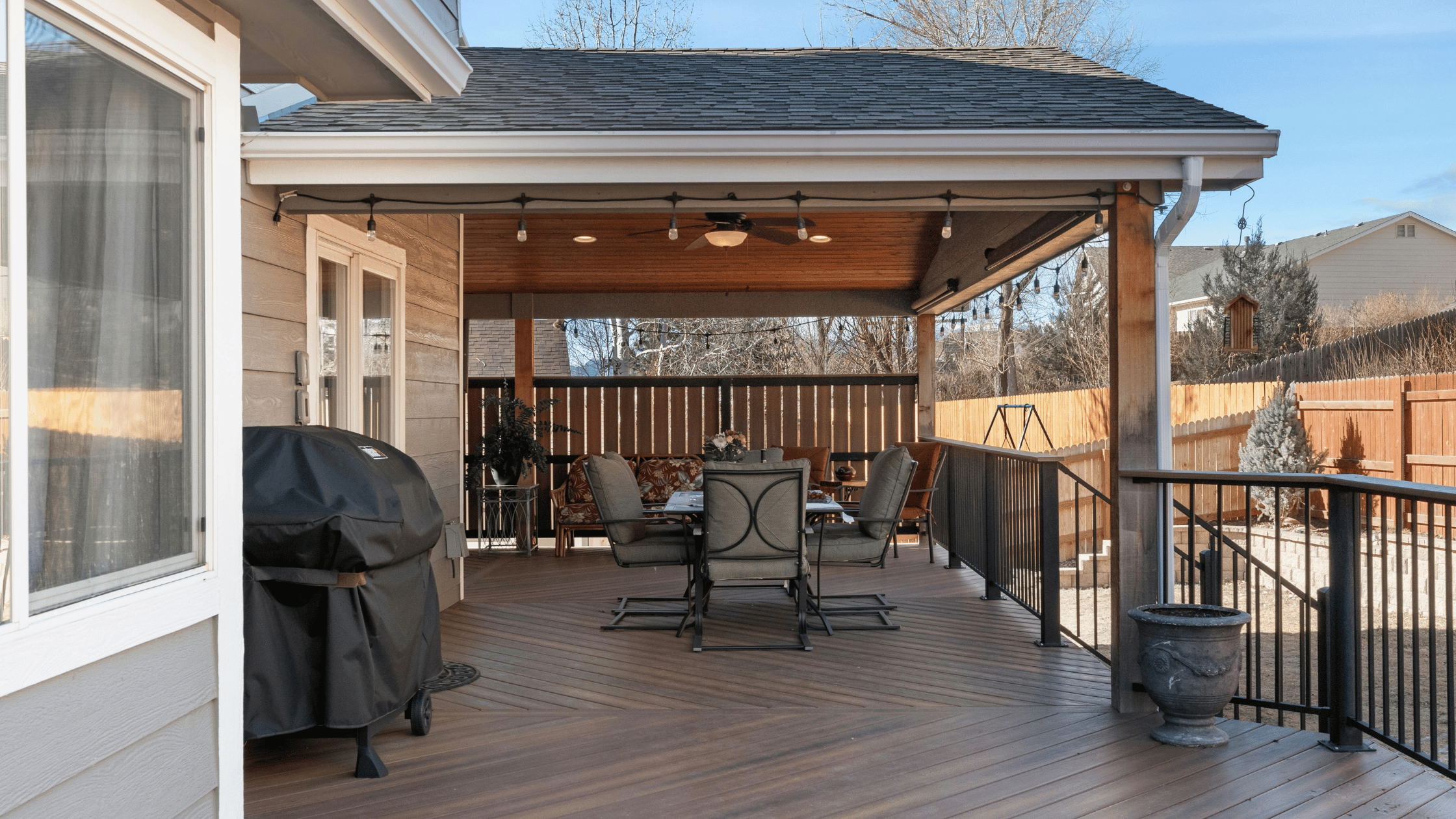
Borders add up too. Some decks have a frame of boards around the outside edge, called a picture frame border. It looks clean, but it takes more boards and more cuts.
Then there’s fascia. These are trim boards that cover the outside of the deck frame. They give the deck a finished look from the yard.
Boards are the start. Here’s what else a composite deck job usually needs.
Fasteners. Some composite boards have grooves on the edges for hidden fasteners. Others have solid edges and get screws on top. The board you choose decides which one you need.
Trim and fascia. Covered above. Count the outside edges of the deck to estimate it.
Railing. Many decks need a railing, depending on height and local codes. Check what applies before you plan it.
The frame. Composite boards sit on a frame of joists and beams. The decking is what TLC Elite carries, so plan to get framing material separately. If you’re keeping an old frame, make sure it’s solid before you build on it. And check the board maker’s install guide for joist spacing. Composite can call for different spacing than wood.
Exact pricing depends on the product and the job. But here’s what usually moves the total.
Still deciding between composite and wood? Our post on replacing a wood deck with composite decking walks through that choice.
This is where people get stuck.
Composite decking is kept in stock at our Dawsonville showroom. Colors and lengths can change, so it’s worth checking before you make the trip.
You can see samples in person and compare colors side by side. And if questions come up while you plan, our team is happy to help. You can also browse our composite decking options online.
Start with your measurements. Sketch the deck, mark the stairs, and note where the edges are.
Then bring your questions. Knowing what goes on the order before you buy is the easiest way to avoid a second trip.
Start with the deck’s length times its width to get square feet. Then turn that into boards based on board width, board length, and the gap between boards. Add boards for stairs, borders, and cuts. Check with the TLC Elite team on which lengths are available.
Most composite deck jobs also need fasteners, fascia or trim boards, a frame, and often a railing. TLC Elite carries the decking itself, so plan to get the rest separately.
Yes. Composite decking is kept in stock at the Dawsonville showroom. Colors and lengths can change, so it’s worth checking before you come in.
Sometimes. The frame needs to be solid, and the joist spacing needs to match what the board maker’s install guide calls for. If the frame is soft, rotted, or loose, fix that first.